
In a time where a simple touch exposes a vast array of information and our daily lives unfold amidst a constant stream of updates, messages, and news, a unique sense of unease permeates modern society. It is not a lack of knowledge that troubles us. Indeed, humans have never been as well-informed, overwhelmed by details of global events, personal stories, and selectively presented glimpses of the world. Instead, it is the flood of knowledge, the never-ending influx of stimuli, that leaves the contemporary individual feeling both paralyzed and fragmented.
This issue, often termed infobesity or information overload, though seemingly harmless in name, has significant effects on mental well-being, legal matters, and the very essence of human existence. The traditional view of individuals as thinking beings – cogito ergo sum – now finds itself lost in a sea of thoughts, where the act of thinking itself becomes a source of distress rather than empowerment.
Psychologically, the excessive stimulation in our hyper-connected environment is linked to a noticeable increase in anxiety disorders, depression, sleep disturbances, lack of focus, and a new phenomenon known as digital fatigue. Individuals, bombarded by a constant flow of conflicting information and incomplete truths, are deprived of the necessary quietness that once allowed for reflection, understanding, and emotional processing. The mind, overwhelmed by abundance, responds with avoidance, confusion, or a deep sense of existential detachment.
While this detachment does not have a clear clinical classification in mental health terms, its effects are as tangible as any recognised condition. Professionals witness patients whose sense of self is diffused through online personas, whose mental capacity is consumed by the urge to “stay informed,” and whose emotional strength weakens under the weight of witnessed calamities in real-time, yet experienced passively. What emerges is not only stress but a new form of mental fracture – a fatigue of existence stemming from knowing too much, too fast, and with too little context or ability to find meaning.
From a societal perspective, this phenomenon heralds the era of liquid modernity, a concept introduced by Zygmunt Bauman, where social norms, identities, and certainties dissolve into a transient and fleeting state. The overflow of information fractures our collective attention, undermining the conditions necessary for civic participation, political discourse, and united action. The once rational public sphere crumbles into a chaos of internet trends, social media movements, and divisive outrage. The citizen transforms into a recipient of stories, rather than an instigator of change.
In this dilemma lies the paradox: while democratic societies rely on educated citizens, the sheer amount and speed of information today paradoxically erode the very foundations of democratic discussion. False information thrives not in obscurity but in the blinding light of excessive exposure. In such circumstances, the concept of “truth” becomes increasingly elusive, not due to suppression but due to diffusion. This signifies not only a crisis of knowledge but a fundamental puzzle.
Legally, especially in the realm of constitutional law, the right to information – enshrined in various documents – must be reconsidered in light of unintended outcomes. While access to information is crucial for transparency and responsibility, there arises a necessity to define a right against information overload, a right to mental integrity, and perhaps even a constitutional space for mental peace. The legal framework of the future must grapple with the boundaries of intellectual freedom, weighing it against the needs of mental well-being and public discourse.
Philosophically, this crisis calls for a return to fundamental inquiries: What is the essence of wisdom in a world where knowledge is widespread but comprehension is lacking? How can one lead a fulfilling life amidst the deluge of data? Echoing Heidegger’s criticism of technological dominance, it could be argued that modern individuals no longer dwell deeply on the earth but merely skim its digital surface, disconnected from true existence.
Yet, it is in the ancient Stoic teachings that we may discover the most valuable guidance for our era. Marcus Aurelius, reflecting from the seclusion of his imperial tent, reminds us that “very little is needed to live a content life; it all lies within your own thoughts.” Perhaps the most radical choice is not to consume more but to select less. To reclaim focus as a moral decision. To nurture discernment as a civic virtue. And to reaffirm the autonomy of the self against the overwhelming flow of information.
The challenge of our time is not solely technological or psychological but spiritual. It is the challenge of preserving our humanity amidst the noise, of creating significance in a world where each moment births countless fragments. The solution does not lie in seclusion but in mindful selection, in the courageous decision not to know everything, and in rediscovering silence; not as emptiness but as a refuge.
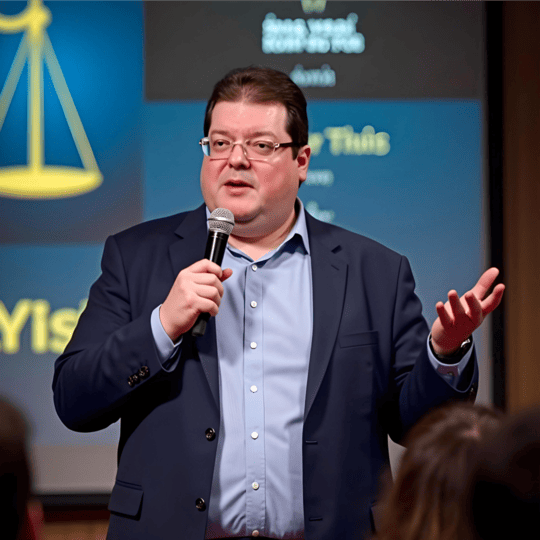
Marcelo Henrique de Carvalho, PhD is a Brazilian lawyer and professor known for his work in human rights and public ethics. He blends legal expertise with journalism to shape debates on justice and democracy.